
Starting tomorrow, we'll have a heat wave, surpassing 30°C on Thursday.
Monday, July 05, 2010
2010.7.5. Bandera
Starting tomorrow, we'll have a heat wave, surpassing 30°C on Thursday.


2010.7.4. Fireworks
Rain. Had 6 guests over for dinner and then watched fireworks on the roof of my building. Started at 10:15. Fortunately, by then, it was no longer raining. The wind was blowing south, half of the show was blocked by the smoke.
Wednesday, June 30, 2010
2010.6.20-29: Quito & Galapagos Islands

 Quito, at 2800m above sea level, in a valley between two mountain ranges, has a very pleasant climate. Green and hilly. A bit of drizzle, then sunshine. 11 - 17 °C. 2 hours ahead of Seattle. It took 3 flights to get here: stopped at Houston & Bogota. All airports have free wifi (however, the service in Houston airport requires watching ~30 seconds of commercial). No one sells beer in Quito on Sunday, but canned Heineken is ok :)
 Historical center is not big, one of the first cities listed by UNESCO. Colonial buildings in the 1500s and 1600s. The core of the center is the lively Grand Plaza (Plaza de la Independencia), franked by Bishop's palace (now a host of smart boutique shops), presidential palace (Palacio de Carondelet, current president, Rafael Correa, doesn't live here, free guided tour a few times a day, completed with a photo souvenir), Cathedral, and the City Hall. The Culture Center at the southwest corner also merits a visit (a couple of temporary exhibitions, and nice court yards to rest).
show more


 6/21 - 29. Joined Gap's guided tour around some of the Galapagos Islands. ~$2400. Great service, but not enough activity. One excursion in the morning, one after siesta. That means cooped up in a small yacht almost 20 hours a day, making small talk with a dozen tourists and 6 crew members. Activity level fits to both 8 and 80 year old: short flat walking or snorkeling, plus taking pictures.
  3 well prepared meals on board every day, drink and snack after each excursion. Relaxing, but not resting, since I wasn't able to sleep well, nor to read long, due to the wave + the stuffy cabin + noisy AC. Water can be quite choppy especially when traveling between islands.
Flying to Galapagos requires a $10 travel card. Need to keep it until you leave the islands.
 Aerogal feeds passengers even during a 30 minute flight (between Quito and Guayaquil). Very tight leg room. Fully packed plane. Good business ferrying locals and foreigners to and from the islands. show more
Breakfast (same everyday): scrambled egg (perfect), bologna (awful), salami (good), cheese (tasteless), yogurt, 2 types of cereal.


Lunch: mushroom w/ tomato sauce over spaghetti.
Dinner: shrimp in cream sauce, rice, mixed veggie cooked with onion.
Almost every meal was accompanied by watermelon and pineapple, every dinner had a desert. All nicely laid out.
The entire crew lives on this island. They were given leave until midnight, when we sailed to Española island. The 5 hour ocean journey (at ~ 7-8 knots) was very choppy.
6/22 Tuesday ------ Española (Hood Island)
 7am breakfast everyday.
8am landing at Punta Suárez, west end of the island. A loop trail. Lots of marine iguanas (a sub-specie only found on this island: red and green skin, looks half peeled), one piled on top of another, barely moving, smelly. show more


 Beautiful sunset. Our chef Angel fed fish entrails and bones to pelicans, and they came and perched on the boat roof.
Sun sets around 6pm, it gets dark quickly. Clear night sky: Southern Cross + Orion's Belt + Bigger Dipper at the same time. We set sail shortly after dinner (~7 hours). I hurried down a motion sickness pill and went to bed.
Today's meal: lunch = rice + beef chunk cooked with carrots in tomato sauce; dinner = fish (overcooked Wahoo).
6/23 Wednesday ------ Floreana

Finally sunny. Landing at Post Office Bay, north end of Floreana. Small. 20 meters inland is the postal barrel. Everyone started reading and sorting postcards. Many of these were marked "do not pick up". A few were taken by some of us to be delivered back home. I didn't find any addressed to my state, nor the neighboring states. show more
Today's meal: lunch = shrimp ceviche (mixed with last night's wahoo), pork chop + mashed potato; dinner = chicken, potato salad. Drink: naranjilla.


6/24 Thursday ------ Santa Cruz
 Drizzle then sun. Humid, hot.
 Darwin Research Center (a Belgium NGO, not funded by the $100 park admission). Free to wonder around. Display of projects and information about the islands. The highlight is the giant tortoise breeding program: saw eggs (look like ping pong balls), babies of 1 - 3 years old, lonesome George (the last survivor of the Pinta island sub-specie, who refuses to breed), and Diego (the father of the current population on Espanola). Giant Tortoise (geochelone elephantopus) can live to ~200 years and over 250kg, with a carapace over 1.2m long. They can survive for a year without water and food: capable of metabolizing fat into water. There're two extreme types of shell shape: smaller saddleback in arid habitat (4 - 5 nests a year with ~6 eggs per clutch), dome shaped (more similar to the rest of tortoise species, 2 - 3 nests a year with up to 20 eggs per nest). Eggs are laid between June and December. Incubation takes 5 - 8 months. Warmer nests result in females. It takes 20 - 25 years to reach adult age. It's the saddleback that gave the name of Galapagos. The other place in the world with any giant tortoise is Aldabra in the Indian Ocean.
Tall Opuntia. 2 big land iguanas. Our temporary guide Edger is very knowledgeable.
show more


Sailed north around Santa Cruz to North Seymour. ~ 4 hours.
Today's meal: lunch = chicken in soy sauce, rice, salad; dinner = wahoo fish with mushroom sauce, potato, zucchini. Poor Nahum, an Israeli abuelo (in his 80s) only eats Kosher, so had to rely on dry supplies, supplemented by the uncooked veggie and fruit. The other 4 Israelis eat everything. Two young guys already traveled in South America for over half a year, impossible to be picky about food.
After another welcome ceremony, our new guide, Hanzel, told us about himself, and his theory on the fur colors of an animal (on the back of his ears). Over an hours long!
6/25 Friday ------ North Seymour show more, Chinese Hat show more
 Sailed west for 2 hours to Chinese Hat island. Sailed for Bartolomé, ~ 2 hours. Beautiful scenery, one little islet after another. Right at the sunset, the dramatic pinnacle rock of Bartolomé came into view.


Today's drink: guanabana, Maracuyá; Lunch: lasagna, barbecue chicken, cauliflower; Dinner: beef (steak-alike, too tough), string beans, more cauliflower.
Lecture after dinner: sea lion (long neck bone, high fat milk).
This was my favorite day.
6/26 Saturday --------- Bartolomé show more - Black Turtle Cove show more
 Bright early (~7am), we walked 390+ stairs to the light house (115 m).

After lunch, sailed to Baltra for fuel. On the way, a dozen or so dolphins jumping in water next to our boat, for a good quarter of an hour. Charming! At Baltra, a military base, we were instructed in stay inside our rooms.
Sailed for South Plaza island. On the way, 8 frigate birds flew with us. Moored just outside of a sea lion beach. They made noise all night long.

Today's meal: lunch = wahoo, potato; drink = mora (blackberry); dinner = pork in pineapple sauce, pinto beans, canned asparagus, iceberg lettuce.
Lecture tonight: Charles Darwin. It caused a long debate of the importance of Darwin vs. Newton.
6/27 Sunday --------- South Plaza show more - Santa Fe show more
 South Plaza is tiny: 100m by 1km. A loop trail covers half of the island. Sea lions and sally crabs greet you as you land (slippery). Red carpet of Sesuvium edmonstonei, interspersed with Portulaca oleracea and tall opuntia cactus.

Sailed for Santa Fe island. Very choppy water for over an hour: I had to lie down. Still felt dizzy when I went down for lunch.
Today's meal: lunch = spaghetti with meat, veggie sauce; drink = naranjilla, pizza; dinner = chicken, beef, chorizo, lettuce.


Farewell ceremony (tip collection), no lecture. Packing.
6/28 Monday --------- Santa Cruz - Baltra - Quito
Breakfast at 6am! Departed at 6:30am in rain. show more

Ferry to Baltra, Aerogal bus waiting at the dock to take passengers to the airport.
10:40am flight to Ouayaquil, Quito. Exit row! Reached hotel around 3:30pm.
 Traversed park Ejido (no activity on this Tuesday afternoon) for Basilica del Voto. Exquisite windows, 2 layers, tall, each a different story. Even though it was not sunny, the windows still shone magnificently. Boring alter. Cheesy bandena decoration. The ongoing mass had only about a dozen lambs. Loud speakers were employed.
 Continued walking towards the old town. Delightful in fading daylight, and then in evening lights. After a week of western cuisine, I finally had the opportunity to try some local food. Empanada the size of a rugby ball (light dough, much tastier than the small ones found in US), morocho (a sweet milk drink with white corn and cinnamon), Chicharon, fried corn kernels, grilled meat on stick.
Finally a good night sleep: the ground was no longer rocking.
6/29 Tuesday ---------- La Mitad del Mundo
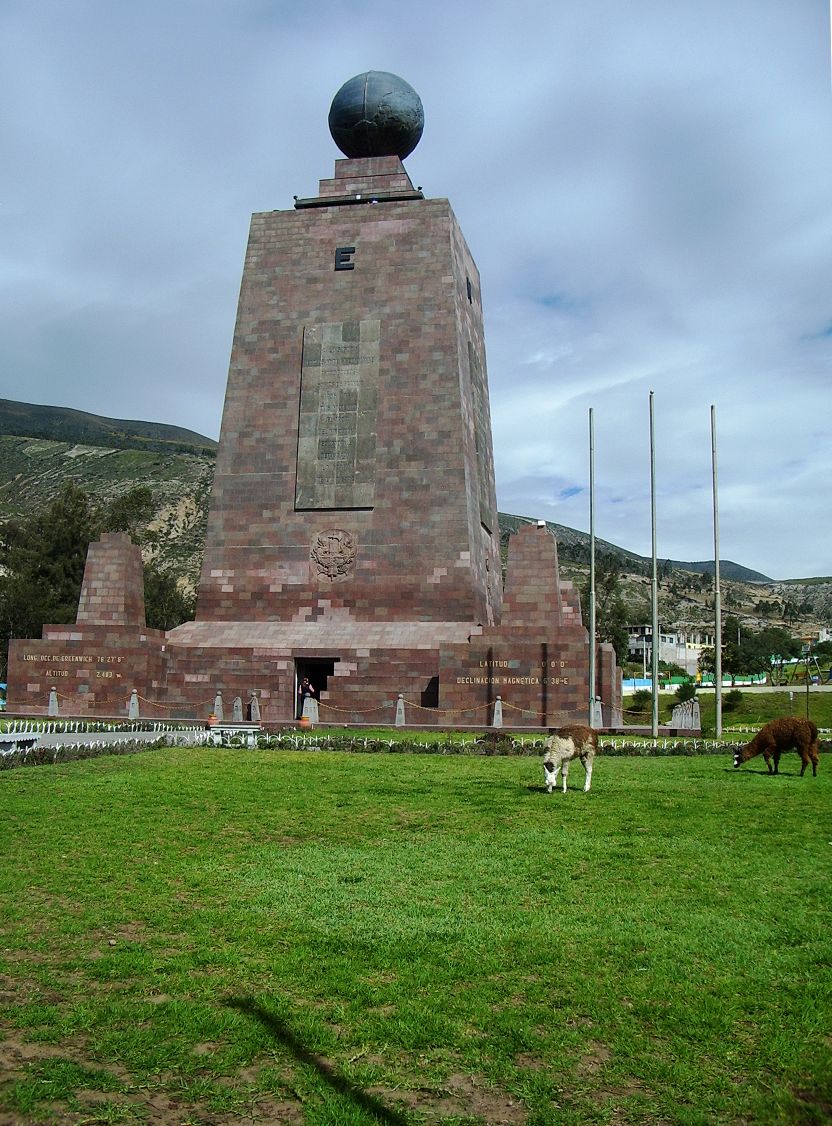
show more


From Quito, there are many day trips one can do: Calderon dough figure, Sangolqui market, Pasochoa Wildlife Refuge, Otavalo indigenous market. 2 day trips: climbing Pichincha, cloud forest around Mindo, thermal retreat at Papallacta. For more time: volcano Cotopaxi, waterfalls along Baños - Puyo road, UNESCO listed colonial Cuenca, national parks Cajas and Podocarpus, birding in the Amazons. Well, next time.
Sunday, June 13, 2010
2010.6.13. Egen House
Open house at Egen House by Robert Reichert (1923-96). 1500 Lakeview Boulevard E., Seattle, WA 98102.
Organized by Historic Seattle. Built in 1958. ~1400 sqft. The building's cantilever integrated its triangular form into the steeply sloping bowl, but was difficult to maintain structurally as mudslides, highway vibrations, and damp, shady conditons deteriorated the framing, roofing and foundation. Historic Seattle $102k rehabilitation replaced damaged structural material, cantilever (rotting and damaged) was replaced and shored by wood columns, repainted, upgraded kitchen, bath, and heating system, new deck.
Organized by Historic Seattle. Built in 1958. ~1400 sqft. The building's cantilever integrated its triangular form into the steeply sloping bowl, but was difficult to maintain structurally as mudslides, highway vibrations, and damp, shady conditons deteriorated the framing, roofing and foundation. Historic Seattle $102k rehabilitation replaced damaged structural material, cantilever (rotting and damaged) was replaced and shored by wood columns, repainted, upgraded kitchen, bath, and heating system, new deck.
Friday, June 11, 2010
2010.5/20-6/13. The 36th SIFF
Seattle International Film Festival. Again, over 400 movies are screened in 7 venues. Too many to choose from. Armed with a borrowed pass (sometimes) I watched (ordered by my preference):
Reykjavik-Rotterdam. Iceland. 4/5. Well constructed story: a guy took on a booze smuggling trip on ship, while his brother-in-law was enlisted to traffic drug. A few things went out of hand along the way. Funny at time. Hand-held camera:(
Antiplano. Belgium. 4/5. Slow, poetic, somewhat experimental visual and sound effect, beautifully done. A simple story, not much of a beginning, not much of an ending. Mining causing mercury poisoning in the indigenous Andes, and people revolt.
The Reverse. Poland. 4/5. A cute (but not credible) story, well told. The write was old enough (unlike the director, who's too young), should know that disposing a body without your neighbors' knowing during the Stalin time is impossible. In the movie, hiding a dollar coin seems to be more difficult than hiding a body.
Bride Flight. Netherlands. 3/5. 3 new brides (out of 26 aboard the KLM flight in the 1953 London to Christchurch Race) starting their life in New Zealand. Apparently the Dutch government sponsored the making of this movie. Well made, well acted. Nice scenery. Story is unexceptional.
The Robber. Austria. 3/5. A good story, not well told. Based on the life of Johann Kastenberger, a Marathon runner and bank robber.
Min Dit: Children of Diyarbakir. Turkey. 3/5. After the parents were gun down by the secret security force of the state, 2 Kurdish children were forced on to the street. Nothing new. The ending is not bad, after the kids ran into the killer.
Skeletons. UK. 3/5. Two exorcists finally run into someone with similar talent.
The Athlete. Ethiopia. 2/5. No story. Nice images. Abebe Bakila dwells on his past glory, had an accident. Lots of flashbacks.
Turn it loose. UK. 2/5. Documentary of 2007 Red Bull B-Boy dance competition. Some of these boys really can move (spin). Shaky camera. Almost redundant story.
Reykjavik-Rotterdam. Iceland. 4/5. Well constructed story: a guy took on a booze smuggling trip on ship, while his brother-in-law was enlisted to traffic drug. A few things went out of hand along the way. Funny at time. Hand-held camera:(
Antiplano. Belgium. 4/5. Slow, poetic, somewhat experimental visual and sound effect, beautifully done. A simple story, not much of a beginning, not much of an ending. Mining causing mercury poisoning in the indigenous Andes, and people revolt.
The Reverse. Poland. 4/5. A cute (but not credible) story, well told. The write was old enough (unlike the director, who's too young), should know that disposing a body without your neighbors' knowing during the Stalin time is impossible. In the movie, hiding a dollar coin seems to be more difficult than hiding a body.
Bride Flight. Netherlands. 3/5. 3 new brides (out of 26 aboard the KLM flight in the 1953 London to Christchurch Race) starting their life in New Zealand. Apparently the Dutch government sponsored the making of this movie. Well made, well acted. Nice scenery. Story is unexceptional.
The Robber. Austria. 3/5. A good story, not well told. Based on the life of Johann Kastenberger, a Marathon runner and bank robber.
Min Dit: Children of Diyarbakir. Turkey. 3/5. After the parents were gun down by the secret security force of the state, 2 Kurdish children were forced on to the street. Nothing new. The ending is not bad, after the kids ran into the killer.
Skeletons. UK. 3/5. Two exorcists finally run into someone with similar talent.
The Athlete. Ethiopia. 2/5. No story. Nice images. Abebe Bakila dwells on his past glory, had an accident. Lots of flashbacks.
Turn it loose. UK. 2/5. Documentary of 2007 Red Bull B-Boy dance competition. Some of these boys really can move (spin). Shaky camera. Almost redundant story.
Subscribe to:
Posts (Atom)